Thursday, July 7, 2011

A Cold Sanctuary: A Rhino's Tale.

“To leave the world a bit better, whether by a healthy child, a garden patch...to know even one life has breathed easier because you have lived. This is to have succeeded”
[Ralph Waldo Emerson]


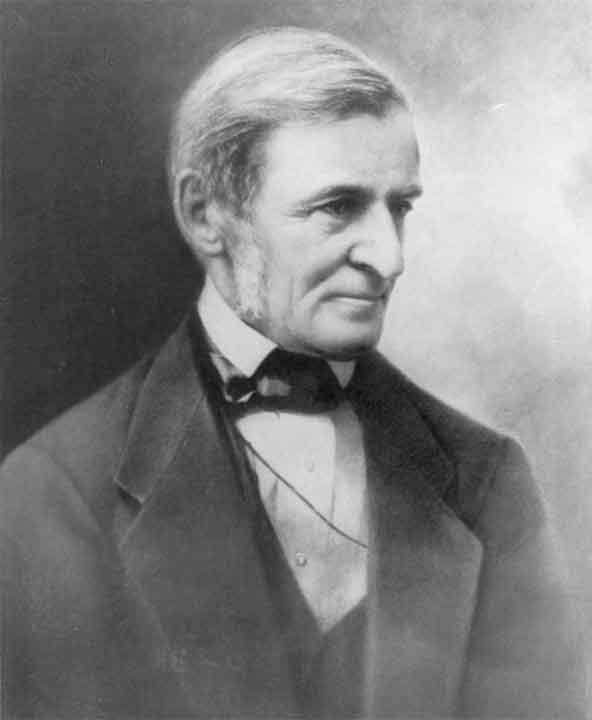
The funny thing is, is that this picture looks strikingly similar to my public health professor who helped to strike my interest in the subject.  


So, a bit of an update on the past few days:
We spent two nights at the Khama Rhino Sanctuary in Serowe, Botswana.  Although I enjoyed Mokolodi, this was a vast improvement.  We saw a wide range of animals including white rhinos, impala, springbok, birds, zebras, giraffes, wildebeest, warthogs, and jackals.  My pictures could not possibly do the Sanctuary justice; it was absolutely beautiful.  We did both a morning and evening game drive. 
To begin however, I think I should mention the trip to Serowe.  Little needs to be said about our miserable experience.  A crowded bus, two kids punching me in the head, air conditioning that went on once every 10 minutes for literally 1 second, sweaty people, 4 hours.  Unbearable.  But we made it.

We woke up bright and early to leave our dorms at 6am for our first game drive, spending the beginning hour driving in the biting cold and waiting for the sun to come up.  As soon as my camera had enough light to focus, we come across two giraffes on our right; I was sitting on the left side again of course.  My focus was terrible, but just sitting and watching such still and aloof animals sufficed; I made a mental image.  The drive alone was enough to satisfy me, our driver was wild and reckless, but it made for an interesting two hours speeding and weaving through the sandy paths.  Much of the land was cleared with scarce amounts of trees and bush throughout.  The land was brown and mainly leafless, with trees and hills bordering the outskirts.  Sprinbok were a hot commodity there; we saw multiple packs roaming and eating the elephant grass.  They almost appeared to be glowing against the grass with their white bellies and clean, brown fur.  Towards the end of our drive, we were finally able to see three rhinos displaying their rear ends for the majority of the time.  It was surprising to see how well they blended in considering their size.  They gave us a quick pose, all aligned perfectly in a row, then passed ahead of the first truck into the bush. 
We spent the afternoon eating brunch and then doing various activities.  Sarah and I spent some time taking pictures, during which I was able to use her 300mm super lens.  I honestly cannot believe I didn’t consider buying a better lens before I came here.  I had to stand back in most cases just to focus on something 10ft away.  We found a random playground in the middle of the bush, oddly placed if you ask me.  At 4 we were off again for our second game drive, which proved to be more exciting than the first.  We saw plenty more rhinos, a watering hole, of course more springbok, and little Pumbas running through the brush.  We were able to get out of the trucks and walk around enjoying the sunset and taking pictures.  Just standing on the ground and looking out at the sun was such an overwhelming feeling; I’m in Africa.
We ended the trip with an experience as unbearable as the arrival.  5:30 am and we were on the safari trucks, anticipating a combi ride to the bus station.  Instead, we hitched a ride in the back of the pickups 20 km and what seemed like 20 minutes on the highway in below freezing temperatures and feral winds.  Still, our first minutes in the trucks were somewhat memorable considering the breathtaking stars in the sky and cityscape ahead of us; but that was soon forgotten when the wind was cutting into our faces.  The stuffy bus never seemed so desirable.  Finally, we arrived at the bus station with runny noses, bad hair, and compromised immune systems.  The bus ride back was calm and cramped, but the warmth was more than welcome.
In the calmness of the loud bus, I began to think about the initial reasons of why I wanted to come here, and how I’ve been applying those to my experiences.  I still find myself at a junction, deciding between public health and medicine.  I am so passionate about both, and am still unable to choose between the two.  I know I want to spend my time helping and educating people on health.  With medicine, I’m mainly terrified of the process and time commitment, but I just have an assured feeling that I would be happy in the end.  With public health, I know I would enjoy learning about disease, doing research, and educating the public, but honestly don’t see much promise in the job market.  Doing an MD/PhD is a possibility, but seems like too much time spent on my indecisiveness.  So, either way I am helping people, but whether I will be happier with one over the other, I am still unsure.
I ended the trip with a full appetite of African wildlife, broken headphones, a sufficient lack of sleep, and uncertain mind. 


Because of our change in schedule, we have the weekend free to do whatever.  I think I will spend most of my time finishing my gift shopping, so I can finally stop spending hopefully!  Tomorrow we are deciding on our Victoria Falls trip, which we will be going on next weekend over the holiday.  I hope to do the elephant back tour and sunset cruise, but cannot decide whether or not I want to bungee jump!  110m seems like a long distance to basically free fall, especially with a waterfall in the backdrop and rapids beneath me; but how many people can say that they bungee jumped over Vic Falls??  I have a feeling I’ll get to the platform and either collapse, start bawling or most likely a combination of the two; the worker will have to literally slap me, pick me up, and hurl me over the ledge.  I guess that’s one way to do it…no one has to know about the process, I just want that picture of me free falling, preferably without capturing me crying and screaming. 
To bungee or not, that is the question!  I just won’t eat anything beforehand. 

Wednesday, July 6, 2011

Diamonds, Diamonds, Diamonds


Today we visited DTC Botswana, which is their diamond trading company.  Fortunately, we could have one camera, so I took the responsibility upon myself to take mediocre pictures. 
Unfortunately, we were coming towards the end of the work day, so not many diamonds were in plain sight.  We were able to go through a ridiculous amount of security, including passport checks and at least 5 key access doors.  We were escorted throughout the building and outside, with most of the eyes on me and my camera.  Trust me, even if I did take confidential pictures, they would be too out of focus to decipher.
The building was created in 2008 and was incredibly modern and well equipped with security. 
We were given a brief history on Botswana and its diamond industry:
In only 1966, Botswana was classified as the 3rd poorest country and had less than 5km of paved road, one hospital, and few clinics.  In 1967 its economy and development were forever changed when diamonds were discovered.  The Jwaneng mine is the richest in the world and is located in southern Botswana.  Since then, Botswana has become the forerunner in diamond mining, contributing 60% of the diamonds traded. 
In the US, diamonds are a luxury; in Botswana, they are a necessity.  They account for 50% of Botswana’s income and 30% of its GDP.  They allow for free health care and schooling, including college.  Currently, Botswana is trying to allocate the aggregation process from London to Gaborone, further increasing revenue and decreasing security risk.  They are also trying to create an industry in which diamonds can be cut, designed, and sold in the country.  Diamond trade is an 8 billion dollar industry, but diamond retail is a 70 billion dollar industry.  By creating “Botswana” diamonds, the country could drastically increase their income and continue in their positive development.  

    We were able to see a few piles of diamonds being examined for quality.  It was incredible to see how naturally perfect they were, although they had not been processed at all.  It was so interesting to see such a pivotal component of their economy…and to see a pile of diamonds!


*I'll post about the Khama Rhino Sanctuary soon, and put up plenty of fuzzy pictures

Boseja 1 and What What

Sorry for the delay in my commentary on Mochudi’s clinics, but fret not!  Here is my patchy synopsis of our four days spent in Boseja 1 (aka “Brocedure” because we would rather say that):
            Boseja 1 is located just down the road from Borakanelo (the now famous restaurant graced by the presence of first lady Michelle Obama, aka “mma obama”).  Located in what seemed to be the middle of a sand dune, Boseja was laid out on a small square plot with three main buildings: a kitchen, HIV clinic, and main clinic.  There was also a small but neglected garden in the back of the clinic, dried and needing attention.  The main clinic was square with a pharmacy, maternity room, family planning room, TB room (with an outside dispensary), injection/dressing room, dispensary, and a consultation room. 
            Unfortunately due to the strike, the clinic staff was halved to only 5 workers, three of which who actually interacted with patients.  The staff began their day with song and prayer, which were both beautiful and a positive sign of improvement from Extension 2.  Brenda, the head nurse, seemed strained and overworked, seeing all of the patients the first day excluding the children being weighed.  I don’t think our arrival could have been more perfectly timed and needed.  I honestly felt as if our help and presence were both appreciated and wanted.  The clinic was without a pharmacist, doctor and HIV test kits.  Due to the lack of kits, it didn’t seem as if Mampo, the counselor, had much work to do.  June, the male nurse, arrived the second day which divided the work and wait time.  Sophie, a local favorite, spent the majority of her time helping mothers with their children or sitting in the sun. 
            The four of us were quickly welcomed and incorporated into the shorted staff, helping wherever we were needed.  We would spend our mornings taking blood pressure, baby weights, and observing until lunch at 12:45.  The afternoons were a welcomed contrast from Gaborone clinics; almost no patients arrived after the clinic reopened at 2pm.  The afternoons were spent counting pills and talking with the nurses who soon became close friends.  Brenda and Sophie soon became our entertainment.  I could honestly see a difference in their countenance, turning from stress to relief and warmth.  The clinic turned into something we all looked forward to and dreaded leaving at the end of the week. 
It still had similar deficits to Extension 2, including staff shortages and lack of sanitation.  I think many of the patients should be more educated on hygiene, especially when in public.  If you haven’t noticed from my comments yet, personal space is everyone’s space.  When you aren’t covering your mouth when you sneeze and cough, or don’t wash your hands, the spread of disease is inevitable.  “Biohazard” doesn’t seem to have the same effect on these patients either.  I saw multiple patients set their medical folders directly on biohazard covers, which were just covered in blood and pus from someone’s infected wound.  Hopefully my quick gesture to remove the folder and worried look served as a hint of caution.  Additionally, the scale was never cleaned.  Considering the amount of sand alone, I don’t think many people’s feet are very clean.  Many of these issues simply need education and set standards to be solved.
Luckily, my time was not spent on being preoccupied with these hygienic woes.  It was rather spent listening to Sophie and her incredible rants and “what what.”  A famous phrase of hers, “what what,” first used when she explained to us the meaning of their prayer: “we are asking Jesus for blessings and what what.”   Sophie was a large, loud, and often late woman who none of us will forget.  She quickly made us feel welcome and was a continual source of good humor and admiration.  She was kind enough to invite us to her Massimo, which is here cattle post/farm.  We met her on Friday, their First President’s Birthday, at her house in Mochudi.  We were given what seemed to be a mix of a lime and orange, which was just taken from a tree in her front yard.  We then drove to her farm, only 30km from the South African border; you could see its mountains along the horizon. 
Her farm was quiet and peaceful, with a large amount of land and a small two bedroom home and a kitchen.  There were two skinny puppies, an outdoor kitchen, outhouse, and watermelon patch.  We spent an hour wandering and sitting in the sun with our new father until Sophie showed with her daughter.  We helped cut pumpkin, kill and slaughter a chicken, and cook soup.  We had what was by far the best meal I have had in Botswana yet.  The pumpkin had no seasonings added, and was honestly breathtaking; I can’t think of another word to describe it.  The chicken and the large portion of rice were enough to keep us full and satisfied for a week.  We finished the meal with juice and cookies, and ended the day walking around their farmland taking pictures and picking corn.  We sat along the interstate waiting for a bus for about 40 minutes, talking and throwing around our oranges given as parting gifts, hoping to avoid the cow pies in the sand.  
As the bus approached, I was smothered with hugs and pleas to never forget that moment from Sophie.  All I can remember her saying is “never forget this, promise me!” and “I’m keeping images of this in my mind until you all send me pictures and what what!”  I left with a full stomach but an aching heart.  It is so odd how I felt as if I was leaving yet again another family.  Since we left Sophie has called to say hello, and I cannot wait until I can see her again.  I never say goodbye to people here or “it was nice meeting you”, it’s always, “I’ll see you soon.”  When meeting people like Sophie, you can never turn your back on such a beautiful place; I’ll return again someday.  My description cannot possibly explain how beautiful her farm and family were, and how absolutely amazing the experience was.  This is by far something I will never forget.
Brenda and Sophie have our addresses and numbers, and I can’t wait for them to visit, call, and write.  I’m looking forward to the many hellos to come and am counting the days until I come back before I’ve even had a chance to leave. 

** I'll put up pictures soon

Sunday, July 3, 2011

Ke Malebogo Mariri...and a tourist.

    My Setswana name is Malebogo (pronounced mal-ay-bo-ho) which means thanks (“ke a leboga” means thank you).  I acquired my surname, Mariri, from my village home stay family.

    My one week in Mochudi left me with a mix of emotions.  It feels as if I spent months there but only hours at the same time.  It was a shaky start with the language barrier and I began feeling my first pangs of home sickness, but I ended the week feeling as if I was leaving a second home.  I think I ate more in that week than I normally do in a month, and now I’m back at the dorms full of pap, fat cakes, Toppers, and man sized Lunch Bars.  

    I also learned more Setswana than I ever could from a class.  I love learning such an interesting language, and I’ve gained so much respect by showing people that I am trying to learn more.  Batswana are patriotic and very appreciative of us embracing their culture.  Everyone I meet says that Botswana “is such a beautiful country” and “it’s nice”; everything is “nice” just like in MN, everything is “interesting.” 

A brief history of Mosanta, which is the area in Mochudi that I stayed in:
            Because of its ridiculous amounts of sand, the locals wanted to call the area “more sand.”  However, their poor English led them to pronounce it as “mo sanda”, hence the name Mosanta.  I was not kidding when I said the place is covered in sand.  If it wasn’t for the equally large amount of broken glass on the ground, I would have walked around barefoot; it was the equivalent of walking on a beach.  My poor moccasins may never recover from the trip.  Aaron, a fellow student, had a much better history however.  When you are saying you are from Botswana, while in Botswana, you say “mo Botswana.”  So, he assumed that the area was named after Santa Claus, who was from the area of course. 

Back to the family home stay:
    The family was very easy to get along with and their personalities were laid back and casual like mine.  The house I stayed in was very small and quaint, with a larger dining/living room, small kitchen, three bedrooms, and a bathroom.  There was running water but no hot water which was a little hard to get used to, especially for taking baths; I can now say I am an efficient bather when given two inches of scolding hot water.  In the absence of a bathroom sink, I had to brush my teeth in the bathtub which I am also quite talented in doing now.  The living room was equipped with a couch and a few chairs and a dining table.  They of course had a TV and stereo for playing their soaps and R&B.  The first day was a bit awkward; I was greeted by chickens, a bathroom with no toilet paper, and a power outage.  I visited the neighbors, who were significantly poorer.  They were still very nice, but spoke very little English.  What I did collect from the conversation between my Mom and the neighbor was that she loved that I spoke Setswana and ordered Janet to always call before I came so she could clean up the yard beforehand.  They had a larger yard full of chickens and sand and a house about the size of my dorm room last year.    

    I shared a bedroom with three girls, Katlego (19 on July 5th), Naledi (12) and Taboka (7).  It was interesting to see the family dynamics in Africa in general.  Naledi is their cousin, but has been living with them because her mom has cancer and is unable to provide for her.  Taboka is the niece/granddaughter and has been staying there because her mother is working in another village.  The father, Malefo, was normally home after 7pm from farming every day.  Our relationship consisted of maybe 4 minutes worth of conversation about how cold Minnesota is.  He left for their cattle post on Wednesday which is closer to the South African border and will stay there until September.  The mom, Janet Mariri, was a proud and talkative woman whom I will never forget.  She was large, loud, and happy and incredibly proud that I learned to introduce myself as “Malebogo Mariri.”  She took me in as one of her own and made sure I was full and warm every day.  She taught me Setswana, how to cook, slaughter a chicken, and make my tea with a ridiculous amount of sugar and milk. 

    I began my stay by being woken up at 6am on Sunday by blaring Christian music and a freezing room; it never got warmer.  From there, I went to church around 9 and happened to be the only woman not wearing something over her hair; as if I didn’t stand out enough already.  The service lasted until about 1:30 and was surprisingly a very positive experience for me.  The church was divided by age group and sex, with men sitting on the left and women in the center and on the right.  The service was also in Setswana, which made it impossible to follow.  The music, however, was beautiful.  Everyone sang with vigor and harmony; it was truly breathtaking.  The priests would dance, and the followers would break into song about every other minute.  The different age groups walked to the center table to give their donations, each group shimmying up to a different song.  It was so uplifting to even see the eldest women dancing and singing all the way up to the table and back, regardless of how long it took them.  Sitting there made me think about my childhood and spending Sundays with my grandma in church, only hoping for the McDonalds kid’s meal afterwards.  From there, I couldn’t help but thinking about how much I missed all of my grandparents and how much I love them.  My first taste of homesickness.   

    After church we travelled to a neighboring village to pick up Taboka from her aunts.  We ended up visiting what seemed to be their whole extended family.  It was an interesting experience to say the least.  I’ve never felt so out of place, walking down a sandy alley having kids yell “Lekoa” at me.  Lekoa traditionally means foreigner, but has taken on the meaning “white person.”  I was told my first day in the clinics that Lekoa is my tribe.  Hearing tribe instills a sense of pride, but walking and having that word thrown at me even by 4 year olds quickly shifted my pride to shame.  Being in the village was by far the most uncomfortable I have been and I truly felt like a tourist.  I think because I was white and in Africa, people assumed I had money and I was there to give it away.  We visited Naledi’s home where her mother, older and younger sisters, and younger brother were staying.  I was asked for everything I was wearing, my phone, and money; luckily not my hand in marriage however.  I was also offered a child, told to clean the yard, and told to catch a chicken.  I think people were demanding these things partly to see my response in good humor, but also with a sense of expectation, as if I was obliged to serve them.  Yes, in Botswana I am well off considering the exchange rate.  But in America, I am in debt; the money I am spending is not in the least bit my own.  Is it that difficult of a concept to understand?  I found myself incredibly frustrated with these people; not everyone in the US is rich.  I worked for the clothes I was wearing, I’m here to learn, not give away my belongings. 
Trying to ignore my frustration, I spent most of the time playing with two younger boys who I think were initially scared of my white skin.  Towards the end we were all having fun though.  Still, no one spoke English, and I couldn’t help but catching on to their laughs and looks directed my way.  I’m sure they were all asking “why the hell is she here?”  I tried to swallow my pride and learn from my situation, but I don’t think that I went away with any new life lessons.  Instead, I left the village with another sister, a sense of alienation, and too much sand in my shoes. 

    I spent the rest of the week in the clinics, which I will describe in another post, eating at “the restaurant Michelle Obama ate at”, and watching soap operas.  I think no matter where I am, I will always be referred to as a Lekoa by all persons under 10 years.  Whether or not it is truly a derogatory term, I don’t think I’ll ever find out.  At least it is mainly limited to those who don’t understand its impact.  I guess I should expect that people will see me as an outsider, considering I am in every sense of the word.  Hopefully I can adjust to the feeling yet prove people wrong. 

    Still, this has been the most rewarding experience thus far, and I will never forget the amazing people I met nor will I lose touch with them.  I can come home knowing how to properly make fat cakes and pap, which I am sure my family will love.  
My home sickness lingers in the back of my mind, but I think that now is the time I’ll begin learning the most about myself.  
I think this vulnerability and yearning for familiarity will finally allow me to step out of my comfort zone and gain an understanding of what I have to offer this country.  

Friday, June 24, 2011

Traditional Healer, Evil Monkeys, and Michelle Obama.

    Today we went to see a traditional healer.  There was not much to the visit.  His room was quite small with walls lined with shelves full of jars with different herbs and mixes.  The man, whose mother was from Zimbabwe and father from Malawi, was a healer from birth.  He talked about how when he was younger, his ancestors would visit him in his dreams to teach him about healing.  He could sense sickness in people.
    From a young age he became well known throughout the communities, and began to build a career out of traditional healing.  He moved to Botswana and has remained there since.  Although I was not easily convinced of his abilities, I was surprised to hear that he does collaborate with modern doctors.  I think that compared to what I have heard about most healers, he is much more humble; all while remaining confident in his abilities.  I would have liked to see more examples of what he does on a daily basis, but that would take more observing than questioning.  
    Following the visit, we all went to the game reserve for a braai.  As soon as we entered we saw ostriches, warthogs, and monkeys...too many monkeys.  At first we were all enamored by their cuteness and would have given anything for them to jump up on our shoulders for a picture.  This glee wore off quickly.  As soon as food was in sight, the monkeys quickly loss their fear of us.  They surrounded us in the trees, snuck up on us plenty of times, and managed to spill a Savanna Light and Heinekin and then steal several chips, pasta, a veggie burger, and whatever scraps were left.  I think they even pooped on someone.  
   I guess not many people could say they had the pleasure of being accosted or pooped on by a monkey, so I'll appreciate it for what it is.
    The end of the day was spent in Game City, buying some gifts and drinking coffee.  The trip back, however, was the longest yet.  As most people know, Michelle Obama is currently in the country and was on a safari tonight which was very close to where we were.  On our taxi ride back we made it out of the parking lot and were stopped for what seemed to be hours.  The police had shut down the main road for her departure from the safari, and we sat there between angry drivers for nearly an hour.  For what? To see about 30 cars speed by, unsure of which had our first lady in it. 
   What are the chances of us being in the same country as her at the same time? You would think the embassy or White House would be inclined to at least let us take our picture with her...but we still have heard no word back on meeting her.  At least now I can say that I saw her car drive by. 

But, this will be my last post for a week unfortunately.  I will be staying in Mochudi, a nearby village, for one week without my computer.  We will be in home stays, which I am incredibly excited for, and will be working in clinics for the whole week.  Hopefully this will give me more insight into their culture and public health system.  I'm sure I will have novels to write after this, so expect a large amount of blogging soon.
 
But, now that I think about it, it may have to wait two Wednesdays from now.  Because as soon as we are back from Mochudi, we have class, then leave for a two night camping trip and the Rhino Reserve I believe.
 
Packed schedule. Can't wait!


Thursday, June 23, 2011

Nothing that is worth knowing can be taught.

“Nothing that is worth knowing can be taught.” –Oscar Wilde

I would have included a picture of Oscar Wilde, but if you Google his photo, you will see why I opted not to.

Another day, another experience. 

    Yet again I found myself in Extension 2.  This day I took advantage of the slow morning and asked as many questions as I could.  I’m finally getting to know people and they are getting comfortable enough to talk in English around me, which is a relief.  I asked Agnes, the nurse from Princess Marina Hospital, about the workers strike and why so many nurses from PMH have come to E2.  She explained how the recession affected Botswana’s economy and how the mining industry was shut down for a length of time because no countries could afford to buy diamonds.  In 2009, I believe, it started up again and Botswana slowly got back to developing, but the work force was still at a standstill. 
    During this time, about 3 years, workers received no pay raises, yet inflation was raising prices everywhere.  Employees were working just as much as they used to, but were not being paid to compensate for the higher prices.  How are they expected to get by even with lower prices when they make almost nothing?  Doctors only make P30,000 a month, about $4,500 compared to the >$100,000 US doctors make.  Also, the majority of Botswana’s doctors are not private practice, but are government employees.  So they finally went on strike.
    What was supposed to be a 14 day strike turned into a 7 day strike and a court case.  The court was in favor of the government, and ordered the employees to return to work.  Many of them, angered in the meager 3% raise offer (when they were asking for 16%), did not return to work and were laid off.  Little did the government know, when you fire the majority of your health care workers, you then have no one to work in the clinics and hospitals.  So with a shortage of workers, many of the nurses were relocated, still with no raise.  There is obviously much more to the story that I know little else about, but I am trying to keep learning as I go.
    It is unfortunate that people are not getting paid for being overworked and for providing vital services to the public.  How can a nation develop when it isn’t healthy?  I think this is one of the lessons you don’t want to learn after you see the bad end of it, which I think Botswana may be reaching with its high rates of chronic disease and STIs. 
    I also learned about why many of the doctors are not from Botswana.  The government pays its citizens to go to school, so many doctors went abroad for medical training.  However, most of them did not return, which led to a net loss for the government.  Also, for reasons I’m not sure of, foreigners receive more benefits than the citizens.  I don’t understand the specifics, but foreign doctors are paid more and receive better accommodations than people who have lived in the country their whole life.  Why should non-citizens reap the benefits?  I’ll have to look into this more.
    The exciting parts of the day consisted of seeing a man’s head wound get sutured and going to PMH in an ambulance.  The head wound was about 3 inches long and maybe 1cm deep.  It was odd to see how tough the skin on your head is, but somewhat relieving to know you have that protection.   Going to the hospital was very interesting to say the least.  The woman unfortunately had a “missed abortion,” which in our terms is a miscarriage.  Reading her records, which were written with poor penmanship, I believe she had a previous ectopic pregnancy.  She came to the clinic with vaginal bleeding, abdominal and back pain, and an upset stomach.  She was 7 weeks pregnant, but had a very small gestational sac, which I think is what indicated that there was no fetus or that it was not developing.  Also, they could not find any fetal heart rate.  She was given an IV at the clinic and we transported her to PMH.  On the way there and back the ambulance driver and male nurse, Stan (his middle name, I couldn’t pronounce his first), taught me some Setswana terms. 
I toured the hospital and it was surprisingly much more accommodating than I had expected.  The hospital is mainly one level, and consists of multiple buildings that are connected by an outside path that is covered by ‘canopy roofs’ for a lack of a better term.  One thing I noticed was the lack of technology.  When you walk into a hospital in the US, it is buzzing with heart rate monitors, telephones, computers, ambulances, and simultaneous beeping noises; and it just has that “hospital” smell.  It was rather calm in the ER, with many nurses and ‘blocks’ divided by curtains for each patient; no particular sterile smell.  The waiting room was insufficient with no chairs; beds were brought in when needed.  They call their OR’s “theaters”, but also had many of the wards that you would find in the states.  They only just recently got a cardiac surgeon, and for most other larger surgeries, patients are referred out of the country. 
    By the end of the trip I saw most of the hospital, learned how to formally refer to an adult, and got hit on by Stan.  I also met an oncologist who referred to me as his wife; I don’t think monogamy is possible here with so many marriage proposals. 

Wednesday, June 22, 2011

At the end of the day, we belong to the same race, the human race.

“At the end of the day, we belong to the same race, the human race” – Prof. Phaladze


    I mentioned before the benefits and disadvantages to the Botswana health care system, but I don’t think that I truly evaluated my thoughts.  Today we discussed our different experiences in the clinics throughout Gaborone, and I’ve found that although health care is free in terms of money, it comes at a price in relation to patient care.

    Professionalism and confidentiality are completely different from what I am accustomed to.  Privacy does not exist in these clinics.  Workers enter exam rooms as they please, mid vaginal exam and all.  You would expect patients to be uncomfortable or angry, but at least on the exterior, you see none of those emotions; just indifference.  It’s as if they are accustomed to this level of care; who knows if it is because of a different level of confidence and self-awareness or if it is because they have never experienced America’s definition of doctor-patient confidentiality.  Doctors will be on their phones during consultations, yet patients don’t interject or look phased by the blatant disrespect of their time and health. 

    Now there is a caveat to these observations, Botswana’s work force is at the tail end of a worker’s strike which, for the most part, remains unresolved.  Government workers are severely underpaid and have gone years without raises.  I am sure that if I were in the same situation, it would be difficult not becoming apathetic towards my job when there were no benefits to improving.  It is unfortunate that I cannot see what work was like before the strike, and if the nurses and doctors are taking out their frustration on their occupations. 
However, today I worked with an exceptional doctor who gave me more hope.  He actually explained the conditions to the patients rather than sending them on their way with another referral.  He held his patients accountable, which is a quality I think many doctors lack.  I think it is so customary to keep educating patients while never honestly telling them that their lifestyles are to blame.  About 99% of the patients I’ve seen thus far have conditions that are brought on by their own actions.  Although doctors should make suggestions and not force certain choices on patients, they should also point out the blatant truth: we are the primary determinants of our own health. 

    I think today especially strengthened my opinion on the fact that people should be accountable for their health and appreciate it.  About 40% of the patients we saw today were only there to get sick leave from work.  After seeing 2 patients I could already tell the motives behind their visit.  If you are truly worried about your health, work is not on your mind; you immediately address the situation and the doctor offers an off work form.  If you are using your poor health as an excuse, you come in saying your boss sent you for an off work form.  If your boss was honestly concerned about your health, he would not send you to get the form, he would give you a day off. 

    I think that people should realize how valuable their health is.  Not everyone was given an equal chance at good health.  It is not fair to see people making life choices that make negative impacts on their wellbeing, while others are unjustly dealt poor health despite their lifestyles.  While some are doing everything in their power to stay well, others are disregarding a true gift. 

    I would also like to see doctors offering alternative methods to reach a health goal.  It is another trend that they prescribe and move on; patients should know their options.  Sometimes medication is not the best answer, and can even be a worse decision.  The US is facing “super bugs” that are resistant to a cocktail of antibiotics, why?  Because many people are overprescribed antibiotics, are not prescribed the correct ones, and are not adhering to their dosing regimens.  Although antibiotics are necessary in most cases, they are not necessary in farming and food production which is a leading cause for antibiotic resistant E. coli.  They are also not always necessary in many medical situations.  I think that sometimes they are just a quicker solution to feel better when bed rest can often do the same job in a longer amount of time; we have immune systems for a reason.  This is my opinion, however, and is not a fully educated statement. 

    I would also like to see more preventative care.  This is an area that deserves an infinite amount of resources; no other sector can survive without healthy individuals to run it.  Hypertension, diabetes (type 2), HIV, and STIs are by far the most common ailments in Extension 2 patients (and most likely all other clinics in Botswana).  Each of these could have been prevented with education and check-up appointments.  And not 5 minute check-ups where the doctor asks if you’re okay and you say you’re fine.  Patients should be able to form a comfortable relationship with the same doctor; what is the point of seeing a different doctor every time?  In the time that you could have spent explaining new issues and concerns, you’re instead talking about ones of the past in order to catch up.  With each checkup, doctors can see trends and connections in your health.  They can educate you on the direction you are going, what you can do to get well, and risk factors to look out for.  I think everyone has lied to a doctor at least once because of embarrassment; that should never be the case.  I think this is the biggest development for public health; countries are paying millions on these conditions, while the solution seems so straight forward.

    I find myself learning more and more each day about what goes in to public health and the progress that needs to be made.  I am forming new opinions while strengthening and building upon old ones.  I keep feeling more and more inclined to help others and seeing where I would like to be positioned in health care; on the forefront, dealing with patients one-on-one.  As for working abroad, it isn’t a question of “will I”, it’s “when can I start?”